

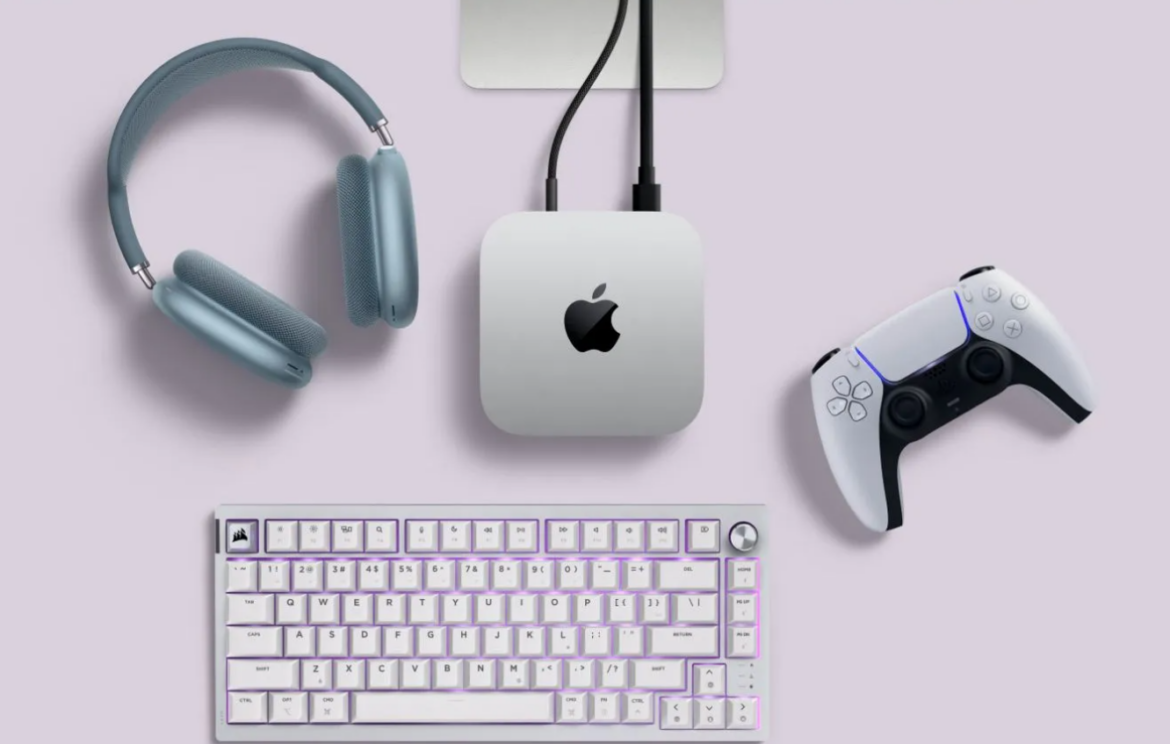
What to choose for gaming between M4 Pro Mac Mini and ROG Flow Z13 with Ryzen AI Max+ 395
Today we’re diving into something every gamer and tech enthusiast has been waiting for—a raw head-to-head gaming test between two powerhouses: the Apple Mac Mini with the M4 Pro chip and the Asus ROG Flow Z13 powered by AMD’s new Ryzen AI Max+ 395 APU.
But we’re not stopping at synthetic benchmarks. No sir. We’re firing up Ubisoft’s latest title, Assassin’s Creed Shadows, and running pure 1080p native gameplay, no upscaling, no frame generation, no optimization hacks. If you’re trying to decide which of these sleek machines actually delivers real-world gaming performance, keep reading. This is the breakdown you need.
🎮 Introduction: What We’re Testing
We put Assassin’s Creed Shadows, one of Ubisoft’s most demanding modern open-world RPGs, through its paces. And we’re doing it across two distinctly different platforms:
🖥️ Apple Mac Mini (M4 Pro Chip)
-
14-core CPU (10 performance, 4 efficiency)
-
20-core GPU (Apple silicon)
-
Unified memory architecture
-
macOS Sonoma
-
Game run via native macOS or compatible port/emulation (if applicable)
💻 ROG Flow Z13 (Ryzen AI Max+ 395 APU)
-
Zen 5 architecture
-
Integrated RDNA 3+ graphics (claimed to rival RTX 4060 in performance)
-
Windows 11
-
Game run on native Windows install
Both systems were set to 1080p native resolution, no FSR, no dynamic scaling, no frame generation, and no visual enhancements beyond default medium-to-high settings to ensure a raw and fair comparison.
🎮 Assassin’s Creed Shadows: Gameplay Breakdown
✨ Visuals
From the very first scene—whether it’s Yasuke’s explosive battle sequences or Naoe’s stealth-driven infiltration missions—Assassin’s Creed Shadows throws a lot of particles, lighting, shadow detail, and enemy AI at the system.
And it’s here where the ROG Flow Z13 starts to separate itself. While both devices were playable, the fluidity and frame consistency on the Flow Z13 gave it a clear edge. On the Mac Mini, cutscenes played smoothly, but during more chaotic combat moments, there was visible frame drop, especially when multiple effects were layered on-screen.
⚔️ Combat Testing – Yasuke Sections
-
ROG Flow Z13: Maintained a solid 40–50 FPS during combat. Occasional dips to 38 FPS during fire particle effects or crowd scenes.
-
M4 Pro Mac Mini: Averaged 30–34 FPS but dipped into the mid-20s in high-intensity scenarios.
This section made it clear: the RDNA graphics in Ryzen AI Max+ 395 are doing heavy lifting, rivaling dedicated GPUs in modern thin-and-light setups.
🥷 Stealth & Exploration – Naoe Gameplay
Naoe’s segments, which focus on climbing, sneaking, and using the grappling hook, rely more on CPU+GPU coordination due to draw distance, lighting, and animation smoothness.
-
ROG Flow Z13: Consistently smooth. Environments loaded faster, shadows and light transitioned with minimal stutter.
-
M4 Pro: A bit slower on shadow render and texture pop-ins during rooftop traversal. Input latency also felt slightly higher, especially with rapid grappling or camera turns.
📊 Benchmark Results
Now let’s move from gameplay impressions to actual benchmark numbers, using the in-game benchmarking tool built into Assassin’s Creed Shadows.
🧪 Benchmark Summary:
| Device | Avg FPS | Max FPS | Low 1% FPS |
|---|---|---|---|
| ROG Flow Z13 (Ryzen AI Max+ 395) | 44 FPS | 60 FPS | 35 FPS |
| Mac Mini M4 Pro | 32 FPS | 46 FPS | 24 FPS |
That’s a 37.5% performance lead for the ROG Flow Z13.
🧠 Why It Matters:
-
These benchmarks exclude all software enhancements like FSR or MetalFX. So this is pure chip-to-chip power.
-
The AMD chip, designed to challenge Apple Silicon, delivers gaming results closer to RTX 4060 laptop levels.
-
Apple’s M4 Pro is still powerful—but for gaming, especially on macOS, it struggles with the optimization gaps still lingering in the ecosystem.
📝 Final Thoughts: Who Wins?
If we’re being honest—with Assassin’s Creed Shadows as the benchmark, the ROG Flow Z13 is the clear gaming winner. Apple’s M4 Pro chip holds its own and is incredible for creators, developers, and productivity, but gaming is not its strong suit, especially when no optimization is layered in.
The Ryzen AI Max+ 395 absolutely impressed—not just beating the M4 Pro, but doing so without any additional GPU. That’s APU-only gaming, rivaling mid-tier gaming laptops.
So if you’re someone deciding between the Mac Mini for general use and light gaming or the ROG Flow Z13 for portable, powerful PC gaming, the numbers speak for themselves. The Z13 with Ryzen AI Max+ 395 gives you real, consistent gaming performance on the go. And Assassin’s Creed Shadows just proved it.
