

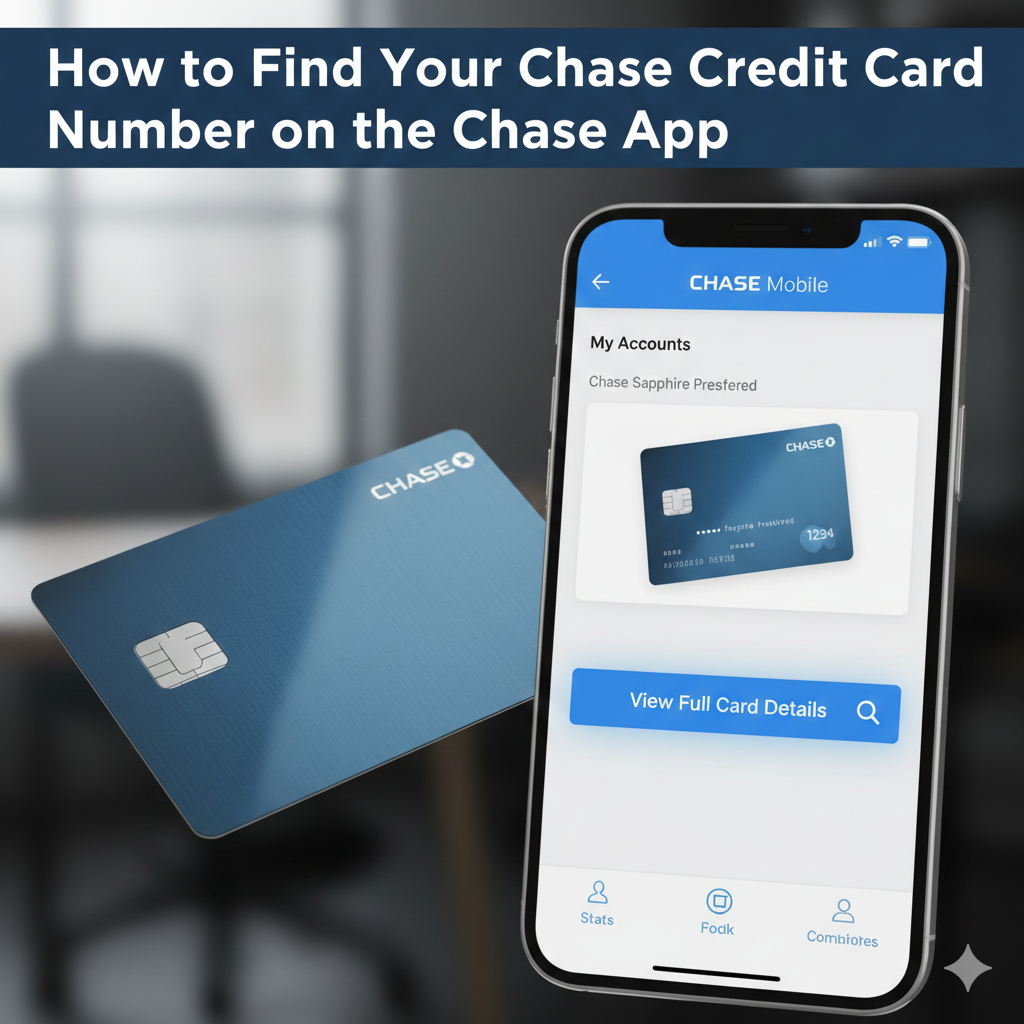
The Chase Mobile app is the primary digital gateway for millions of cardholders to manage their finances. It serves as an all-in-one hub for checking balances, paying bills, and monitoring transactions. However, for security reasons, Chase does not display your full 16-digit credit card number on the main dashboard—instead, it is masked by “X’s,” showing only the last four digits.
If you’ve lost your physical card or are trying to make an online purchase without it, finding those hidden 16 digits can feel like a challenge. This guide will show you exactly how to locate your full Chase credit card number using the mobile app and digital statements.
1. The “Credit Report” Stitched Logic
If your statements are masked (which happens in some jurisdictions), you can use your Annual Credit Reports.
-
Experian often shows the first 12 digits or the full number except the last four.
-
TransUnion/Equifax typically show the last four. By “stitching” these together, you can reconstruct your 16-digit account number, which—for Chase—is identical to your card number.
The “Account vs. Card Number” Mystery Explained
One of the biggest points of confusion for Chase customers is whether their account number and card number are the same.
-
The Rule: For Chase Credit Cards, your 16-digit card number is your account number.
-
The Exception: This is not true for Chase Debit Cards. For checking and savings accounts, the card number is simply a “key” to the vault, whereas the account number is the “vault ID” itself.
For Chase credit cards, your 16-digit credit card number and your credit card account number are identical. This is a specific policy for Chase and most major U.S. issuers (like Capital One and Discover).
-
Why the website says they are different: Chase also offers Checking and Savings accounts. For those accounts, the Debit Card number is absolutely different from the Bank Account number. The website likely uses general language to cover all their products, but for your credit card, they are one and the same.
Why Your Credit Reports Show the Full Number
Your credit report strategy is a classic “pro-tip” used by many people to recover lost card numbers. Here is how that logic works:
-
Data Masking Rules: Different bureaus have different “masking” protocols. Experian is known for showing more digits than TransUnion or Equifax on certain report versions.
-
The “Account Number” on the Report: Lenders report your credit card activity using your account number. Since Chase uses the card number as the account number, the 16-digit string on your Experian report is, in fact, the number printed on your physical card.
When the Numbers Might Be Different
There are only a few rare scenarios where a Chase credit card number would differ from the account number:
-
Replacement Cards: If you report your card lost or stolen, Chase will issue a new 16-digit card number, but your internal Account ID (used for reporting and history) might technically stay linked to the original “account.” However, for all payment and transaction purposes, you will always use the 16 digits currently assigned to your card.
-
Authorized Users: On some cards (like Amex), authorized users get their own unique card number. At Chase, authorized users almost always have the exact same 16-digit number as the primary cardholder.
2. The “Statement” Method: Unlocking the 16 Digits
The most reliable way to find your full credit card number within the Chase ecosystem is by accessing your monthly billing statement. On a Chase credit card, your account number is your credit card number. While the app hides this on the home screen, it is legally required to be accessible on your formal documents.
How to Find It:
-
Sign In: Open the Chase Mobile app and log in.
-
Select Your Account: Tap the specific credit card you are looking for.
-
Navigate to Documents: Scroll down and tap on Statements & Documents.
-
Open a PDF: Tap on Statements and select your most recent monthly PDF.
-
Locate the Account Summary: On the first page, look for the gray box titled “Account Summary.” 6. Find the Number: Your 16-digit number is typically listed right next to the Chase logo or within the summary box.
Expert Tip: If the summary box is masked, look at the very bottom of the first page on the Payment Coupon (the slip you would normally mail back). There is often a long string of OCR numbers at the bottom—the first 16 digits of that long string are your credit card number.
📱 Alternative: Using the “Show Details” Feature
Depending on your specific card type and app version in 2026, Chase has introduced a more direct way to view card info for certain users.
-
Tap the Account Tile: From the home screen, tap your credit card account.
-
Select “Show Details”: Look for a link or button labeled Show Details near the top of the screen.
-
Verify Identity: You may be prompted for a FaceID, Fingerprint, or a one-time passcode. Once verified, the app may reveal the full number, though it often still masks the CVV.
3. Tracking Multiple Streams of Income & Expenses
For those managing personal finance for business owners, keeping track of where money is going is vital. If you use your Chase card for both personal groceries and business supplies, the app’s Spend Analysis tool can help.
By identifying your full card number, you can link your Chase account to third-party tools like Monarch Money or YNAB, which are excellent for budgeting for busy families and entrepreneurs. These apps can automatically pull your Chase data, allowing you to separate your business expenses from your family vacation costs without manual entry.
4. The CVV and Expiration Date Dilemma
While the app and statements can provide the 16-digit number, they rarely show the 3-digit CVV (security code) or the expiration date for security reasons.
-
If you need to shop online: Check your browser’s Autofill settings (Safari or Chrome). If you’ve used the card there before, the CVV and expiry might be saved securely.
-
Digital Wallets: If your card is already in Apple Wallet or Google Pay, you can often use those services to check out on websites even if you don’t have the physical card number memorized.
-
Last Resort: If you absolutely cannot find the CVV, you will likely need to call Chase Customer Service or request a replacement card via the “Replace a lost or damaged card” feature in the app’s settings.
Frequently Asked Questions
1. Can I see my 16-digit credit card number and CVV in the app for online shopping?
For security reasons, the Chase U.S. app typically masks your full card number and does not display the 3-digit CVV.
-
The Number: You can find the full 16-digit number by opening a PDF Statement within the app.
-
The CVV: Currently, you cannot view the CVV in the app. You must refer to the physical card or use a digital wallet (Apple/Google Pay) where the CVV is stored securely for transactions.
2. How do I find my credit card expiration date if I don’t have the card?
While the expiration date isn’t listed on the main dashboard, you can often find it by:
-
Checking your Digital Wallet details (Apple/Google).
-
Looking at Merchant Sites where you have previously saved the card for “Autofill.”
-
Calling Chase Customer Service to verify your identity and request the information.
3. Can I use my card before the physical one arrives in the mail?
Yes. For many cards, Chase offers a “Spend Instantly” feature. After approval, you can navigate to Account Services > Digital Wallets in the app to add your new card to your phone. This allows you to make purchases at stores and online even before your 16-digit physical card arrives.
4. Is the credit card number the same as my account number?
Yes. For Chase credit cards, your 16-digit account number is your credit card number. This is why the “Statement Method” works—the account number printed on your statement is the same one used for swiping or online shopping.
5. Is it safe to link my Chase account to budgeting apps like Monarch or YNAB?
Yes, it is generally safe. Chase uses OAuth (Open Authentication), which means you never actually give your password to the budgeting app. Instead, Chase gives them a “secure token” that only allows them to read your transaction data. They cannot move your money or access your full card numbers.
6. Why does my statement only show the last four digits of my card?
Check the Payment Coupon at the bottom of the first page of your PDF statement. While the “Account Summary” might be masked for privacy, the scan line at the bottom of the slip intended for mail-in payments usually contains your full 16-digit number.
