

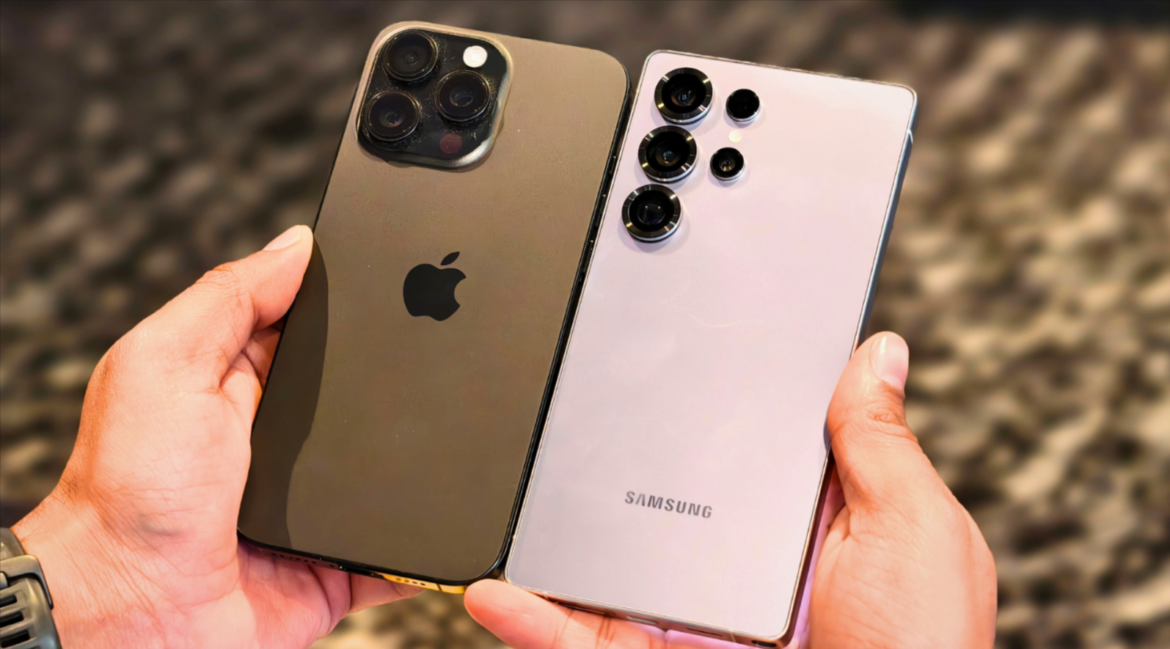
What to choose between Galaxy S25 Ultra & iPhone 16 Pro Max | PC gaming on the iOS/Android for Mobile Gamers
If you’ve ever wondered how AAA PC games run on today’s most powerful mobile devices, this deep-dive into Resident Evil 3 Remake on the Galaxy S25 Ultra and iPhone 16 Pro Max is a must-read. I’m Dame Tech, and in this gaming performance comparison, I’ll walk you through what it actually feels like to play a full-fledged survival horror classic on mobile hardware in 2025.
This isn’t just another benchmark chart — this is real gameplay under equalized, low-graphics conditions, testing how well each flagship handles one of the most demanding PC titles ever ported to mobile.
🎮 Test Overview: PC Gaming Comes to Mobile
First things first — Resident Evil 3 Remake is now officially available for iOS, as a native PC port. That means iPhone 16 Pro Max users get access to the full, uncompromised experience thanks to the powerful Apple A18 Pro chip.
On the Android side, things are a little trickier. The Galaxy S25 Ultra, equipped with the Snapdragon 8 Gen 4 Elite, can’t run the native version, so I used Game Fusion, a PC emulation platform. As you’d expect, this gives the iPhone a clear edge in software optimization — but that doesn’t mean the S25 Ultra didn’t put up a fight.
⚖️ To keep things fair, I locked both devices to:
- 720p native resolution
- Low graphics settings
- No upscaling or frame generation (MetalFX was turned off on iOS)
📊 Low Graphics Performance Test
The test focused on a 15+ minute continuous gameplay session on both phones — running through explosions, intense cutscenes, zombie hordes, and chaotic scripted moments.
🎥 The iPhone 16 Pro Max
- Maintained 60 FPS throughout most scenes.
- Smooth transitions between cutscenes and gameplay.
- Consistent responsiveness — no noticeable lag or stuttering.
- GPU remained stable, and thermal throttling was minimal.
📱 Galaxy S25 Ultra
- Started strong at 50–55 FPS, but quickly dropped to 30–35 FPS during intense sequences.
- Thermal throttling began around the 6-minute mark.
- Occasional input delay and micro-stutters during heavy zombie encounters.
- Textures and lighting were sharper due to the emulation build but at the cost of battery and performance.
🔥 Extreme FPS Throttling: Snapdragon vs A18
Once the Nemesis chase sequence began (around 5–6 minutes into the test), the Snapdragon 8 Elite began to choke under the strain of emulation. Even with all effects turned off, the S25 Ultra dropped into the low 30s in FPS, with aggressive thermal scaling kicking in. Gameplay remained functional, but the smoothness suffered.
In contrast, the A18 Pro on iPhone powered through it like a champ. Even during chaos-heavy scenes like the subway crash or burning alleys, it kept pushing 55–60 FPS. While the graphics were a bit more washed out than the Android version, the overall clarity and frame pacing made for a superior experience.
🖼️ Graphics Comparison: Native Port vs Emulation
You’d think emulation would always look worse — but in this case, the S25 Ultra’s version actually had sharper textures and more lighting detail. Still, the native iOS port won out in terms of readability and clarity. Characters looked more lifelike, animations were smoother, and everything just felt more polished and immersive.
Highlights:
- Android Emulation (S25 Ultra): Higher detail, more ambient effects, but more FPS drops.
- iOS Native Port (iPhone 16 Pro Max): Slightly lower detail, but buttery smooth and visually cleaner.
💡 Final Verdict: Which Device Is Better for AAA Mobile Gaming?
✅ Winner: iPhone 16 Pro Max
Despite the Galaxy S25 Ultra’s impressive specs and better raw visuals, the A18 Pro’s native port advantage makes the iPhone the obvious winner in this specific test. You’re getting more consistent performance, less overheating, and a better plug-and-play experience — no emulators needed.
However, don’t count out Android. The fact that the S25 Ultra can emulate Resident Evil 3 Remake at playable frame rates is still amazing, and future updates to Game Fusion could close the gap.
